

Michael Ullman, PhD

Professor
Connect
Research Building, Room EP-07
Phone: 202.687.6064
E-mail: michael@georgetown.edu
Education
PhD, 1993, Massachusetts Institute of Technology (Brain & Cognitive Sciences)

Dr. Ullman is Professor in the Department of Neuroscience, with secondary appointments in the Departments of Psychology and Neurology. He is Director of the Brain and Language Lab. We study how language is learned, represented, and processed in the mind and brain. We focus especially on understanding how language learning and use depend on evolutionarily ancient learning and memory systems in the brain: declarative memory and procedural memory, which are respectively rooted in the hippocampus and the basal ganglia. We study both native and later-learned language/bilingualism. We are also interested in the neurocognition of math, reading, and music, and whether and how these also depend on the two learning and memory systems. We investigate between and within subject differences in the neurocognition of language and other domains, based on factors such as genetic variation, endocrine fluctuations, sex and handedness differences, and individual differences in learning and memory abilities. In the last few years we have focused especially on the effect of aging on language and cognition in the brain, primarily in collaboration with Dr. Jana Reifegerste (also in the Department of Neuroscience). We test our hypotheses using a set of complementary behavioral, neurological, neuroimaging ((f)MRI), electrophysiological (ERPs), and other approaches (e.g., genetic, endocrine). We are interested in the normal acquisition and processing of language and other domains, as well as the breakdown, recovery and rehabilitation of these processes in a variety of developmental and later-onset disorders, including Developmental Language Disorder (i.e., Specific Language Impairment), dyslexia, autism, Tourette syndrome, Alzheimer’s disease, Parkinson’s disease, Huntington’s disease, and aphasia.
Lexical Effects on Second Language Grammar Acquisition: Testing Psycholinguistic and Neurocognitive Predictions
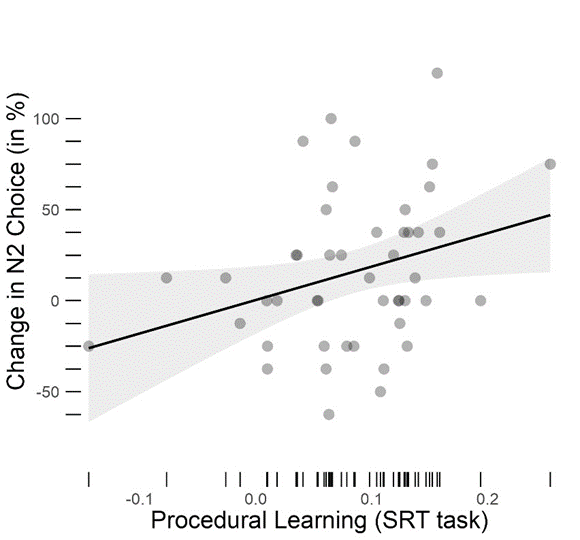
The journal Language Learning selected Hopp, Reifegerste, and Ullman (2025) as the Outstanding Article of 2025.
The study links well-known psycholinguistic and neurocognitive theories of language learning and shows that their joint preditions about adult/second language learning of grammar are empirically borne out. Specifically, both theories (the psycholinguistic lexical bottleneck hypothesis proposed by Hopp and the neurocognitive declarative/procedural model proposed by Ullman) predict that faster second language word processing should facilitate second language grammar learning, as was found in this study. Moreover, the study tied grammar learning to procedural memory, as predicted by the declarative/procedural model.
Abnormal Brain Structure Identified in Children with Developmental Language Problems
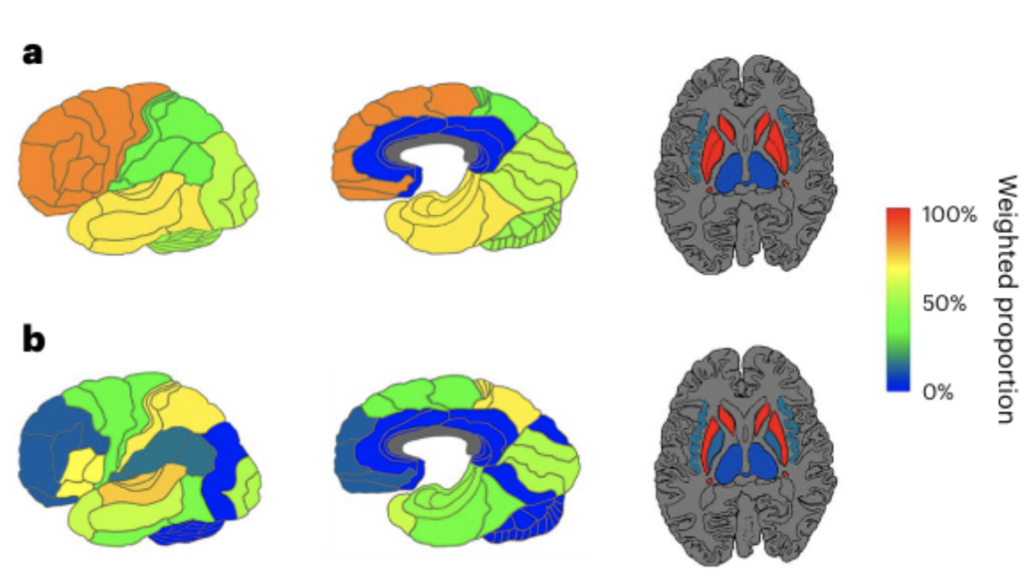
A team at Georgetown developed a new neuroanatomical meta-analytic technique, and used it to reveal the neural bases of developmental language disorder. Their analyses showed that only a structure deep in the brain that is usually linked to motor abilities, called the basal ganglia, was reliably abnormal. The findings may lead to improvements in the identification and remediation of children with developmental language disorder.
Key Mental Abilities Can Actually Improve During Aging
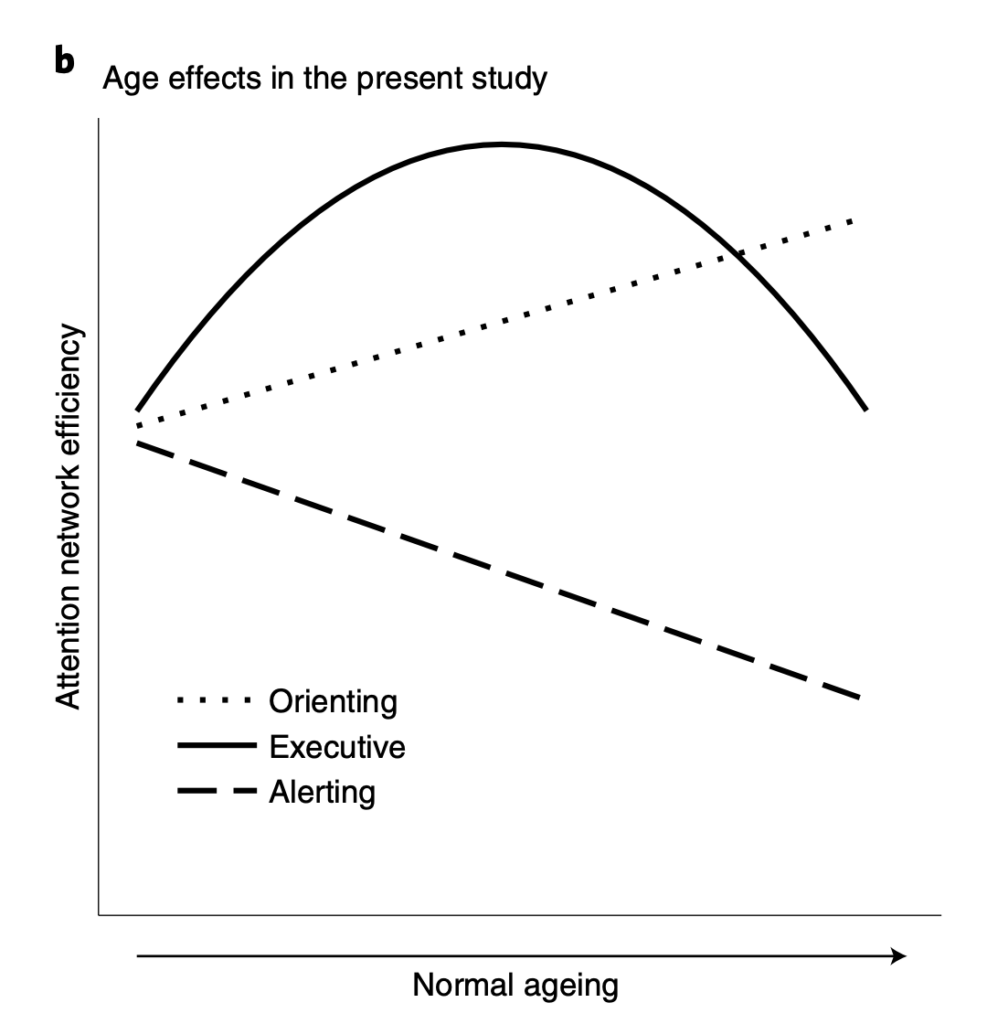
Our study showed that one’s ability to inhibit incoming information (executive inhibitory abilities) actually improves with aging, even while other aspects of attention decline. The results came from a large sample of participants, and were highly robust. The study suggests that, despite the widely-held view that attention and executive function decline in aging, some aspects actually improve.
Bilingual children may lose less brain matter as they grow up
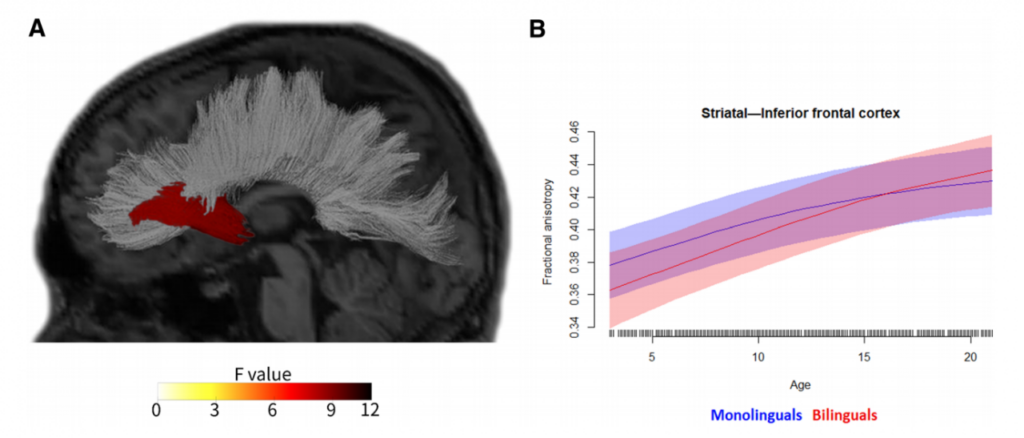
We examined the developmental patterns of grey and white matter structures in the brain in more than 600 monolingual and bilingual participants ages 3 to 21. Bilinguals and monolinguals showed different developmental trajectories. As compared: to monolinguals, bilinguals showed: a) more grey matter starting during late childhood, mainly in frontal and parietal brain regions; and b) higher white matter integrity starting during adolescence, specifically in striatal-inferior frontal fibers. The data suggest that there may be a developmental basis to the well-documented structural differences in the brain between bilingual and monolingual adults.
Early-life Education Improves Memory in Old Age — Especially for Women
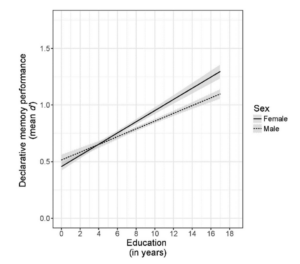
Education appears to protect older adults, especially women, against memory loss, according to a study by Jana Reifegerste and Michael Ullman at Georgetown University Medical Center, published in the journal Aging, Neuropsychology, and Cognition.